From Factory-Built Substations to Traditional construction, our project work reflects the planning, coordination, and experience behind every DTPS solution. Explore examples of how our team helps customers navigate complex scopes, demanding schedules, and critical power delivery needs.

Transcending national borders with seamless supply & transportation services that border on extraordinary.
The largest transmission company in Alberta, Canada wanted to expand the 230kV/138kV Pike Substation as part of the Christina Lake Area Transmission System Development initiative, and they needed a partner fluent in international substation supply. They turned to DIS-TRAN. While the scope of work was typical – the steel structures and everything that attaches to them – the job’s location in far northern Alberta, Canada, combined with a winter schedule, created a pressing set of challenges:
In fact, not only did we get to flex our logistics and project management muscles by running a nearly frictionless project in an incredibly far-flung location, we were also able to forge new relationships and cement existing ones, all while meeting every substation spec down to the nuts and bolts.
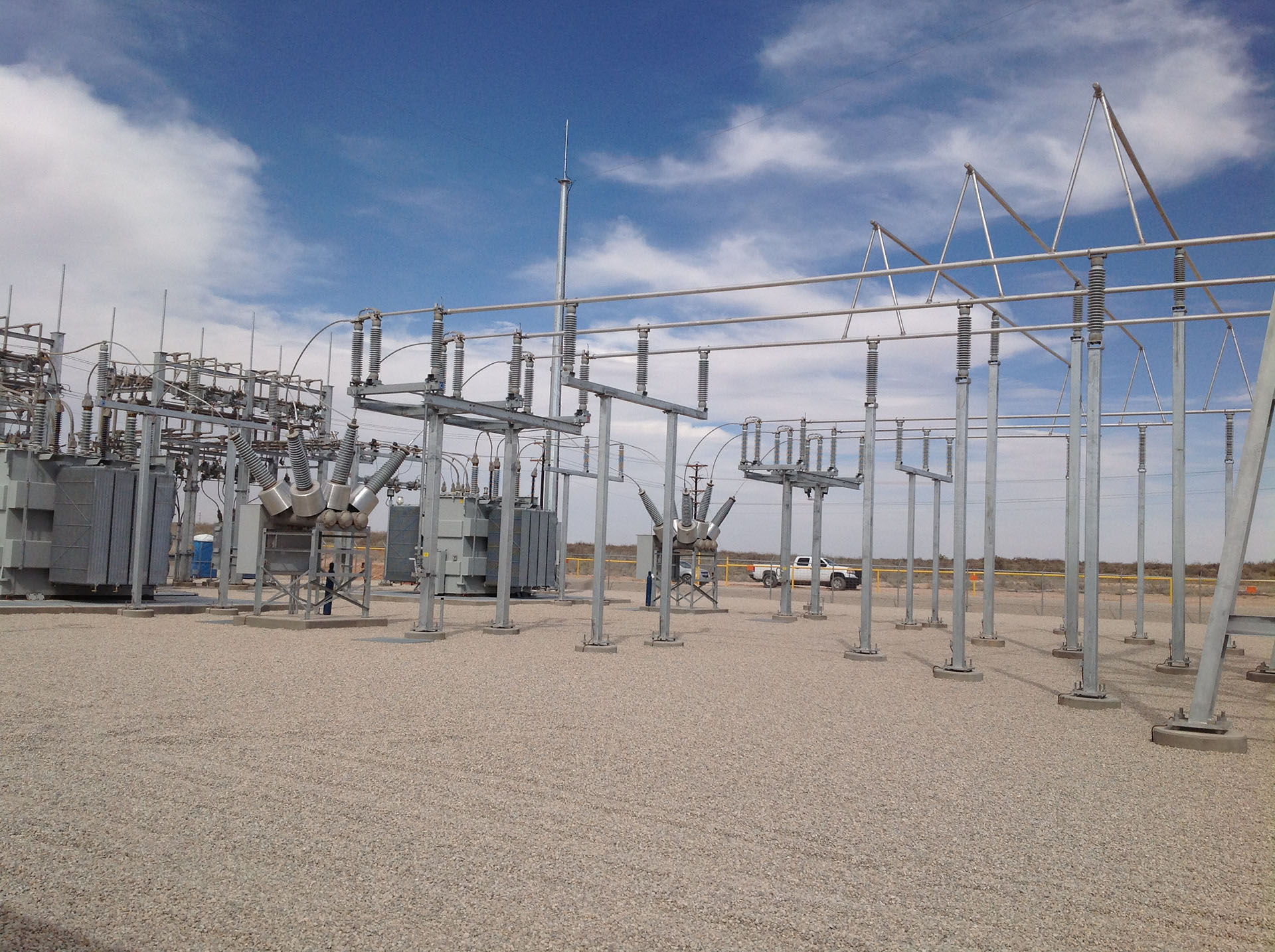
Miles into the middle of nowhere, DIS-TRAN makes a first-class first-impression…and potentially saves our client eight figures annually.
Home to a scant 27,000 people – fewer people than would fit into a football stadium – Carlsbad, NM is surrounded by miles and miles of empty, remote land. It’s the perfect region for a drilling operation run by our customer (part of the Bass Oil Group), but the area’s aging transmission lines required them to power the operation with inefficient and expensive diesel engines. They realized they could unearth significant savings by building an on-site, 115kV/12.47kV outdoor steel substation (and updating the local transmission lines in the process).
They were right: we estimate that for every $1 spent on building the substation, they saved $3 to $6 in annual energy, operations, maintenance and fuel costs over the previous installation.
They asked for the full-service experience from DIS-TRAN, so under our EPC arrangement, we coordinated all aspects of the substation design and construction, including overseeing and liaising between the electrical contractor; DIS-TRAN’s own engineering, procurement and billing teams; and our customer's staff and stakeholders. We even deployed advanced services to ensure the client and contractors faced few-to-no issues during construction and installation. For example, our on-site inventory services team personally delivered secure Connex containers with all project materials and then tallied and measured all equipment and supplies against project needs.
In short, we delivered end-to-end, top-to-bottom, first-class service that saw the substation energized on time and completed with such rigorous adherence to the intricate design that the staff in Ft. Worth, TX can monitor station performance down to individual relays.
The customer was so pleased they brought us their next project without seeking even a single outside bid!

We designed a storm-hardening solution that blows the others out of the water.
Storm surge and flooding are major concerns that all coastal utilities must weather. According to our own local utility (Entergy), the Gulf Coast alone is facing cumulative damages of $350B over the next 20 years from hurricanes and severe storms.
In the aftermath of devastation from Hurricanes Katrina, Ike, Gustav and Rita, one customer wanted to insulate their substation against further flood damage.
DIS-TRAN innovated a brand new solution: in-place elevation. We elevated the flood-sensitive equipment of an existing 115-24.5kV outdoor open-air substation, including:
We lifted the equipment to 13 feet above mean sea level, and we did so with:

We collapsed installation to just days with a tactic worth its weight in gold.
Our customer – a gold mine in northern Nevada – had upgraded its enormous power shovel and thus needed to update its 115/24.9kV substation. But with the remote site located deep in the Nevada desert, two hours from the nearest urban center, it was key to keep on-site construction to a bare minimum. By shipping pre-assembled, skid-mounted equipment, DIS-TRAN reduced installation time to days.
The client asked DIS-TRAN to produce the nine requested low-side distribution bays as assembled as possible at delivery. DIS-TRAN’s engineers mined their deep expertise and found a solution: dividing the equipment into three different sections, three bays apiece, and mounting each section onto skids for easy transport and installation. The skid-mounted assemblies were kept slim to slide onto standard trucks, split into top-and-bottom halves to undercut height restrictions, and still managed to meet performance specs perfectly.
The trucks arrived on-site Monday morning, and by noon on Tuesday, we had the complete low-side distribution section (all nine bays) sitting in place on their foundations. According to our customers – both the mine’s owner and their engineering firm – DIS-TRAN struck gold. We’ve since gone on to do more work for the same contacts from both companies.

Building a lattice-type tower on the double!
Our customer, a public utility based in the Northeast, wanted to build a new 115kV add-on to an existing 345kv substation. This project meant duplicating some of the existing structures right next to where the existing steel was standing; the biggest challenge was perfectly replicating an entire lattice-type tower.
It was a complex build, as the lattices supported an extensive array of equipment, from disconnect switches to instrument transformers. DIS-TRAN’s engineers gave the project extra care and time to ensure the new tower would both perfectly match the aesthetics of the existing one and also meet the new specs and functionality requirements.
With a high-quality design in place, DIS-TRAN was able to deliver the project and meet the customer’s scheduling requirements. In fact, we did so even after running into a hiccup (a shipment of mis-fabricated steel, which we got re-delivered within a week)!
The client was so pleased they sent us some homemade jelly and three more substations projects just like Orrington!

We cut nearly 50% from project time to meet an “impossible” schedule.
This customer hired DIS-TRAN to tie two yards together with a new line, with the project scope including a breaker, some bus supports and a new switch. Pretty easy, right? Not so fast: the job came with a couple of serious provisos:
This was a difficult job, no doubt, but we were able to hit the ground running. We pushed some vendors, worked some extra hours, and poured some creativity into solving the engineering challenges. For example, DIS-TRAN’s substation engineers developed a unique double “inverted V” insulator design, pictured above, to account for the fault current loadings. With this design, we could furnish readily available insulators manufactured domestically as opposed to waiting on custom-designed, special insulators manufactured overseas. That cut project lead time right away.
The result: DIS-TRAN pulled the project together in 12 weeks instead of the normal 20. And that’s with no shortcuts, per specs, per code.

DIS-TRAN rises to the challenge, so our customer (a contractor) can fly high.
In this 345kV station project, DIS-TRAN worked hard to make our customer (a billion-dollar engineering contractor) look good to their customer (a major utility that kept rolling out challenging design changes).
In addition to our standard scope of work (the steel structures and everything that attaches to them), this project also required engineering and design work on overhead transmission lines connecting the substation to a nearby steel mill. That created a looming obstacle: how to deliver enormous 120-foot transmission poles cross-country, timed for delivery in-step with the end-user's construction schedule, with a rising tide of design changes flying our way. Oh, and we had to get everything in place before the end of a scheduled outage.
DIS-TRAN rose to the occasion. We carefully connected and coordinated all of the teams, vendors and schedules for a seamless workflow. The high point? Our organization and efficiency made our customer shine in front of theirs.

Three or four weeks to install? Try 4 days.
DIS-TRAN gave this customer two options for their substation project: pre-assembled skid-mounted or traditional "stick-built."
They went with skids. DIS-TRAN fully marshaled the project (with the steel built just across the street by our sister company, DIS-TRAN Steel), so we gathered all materials in our warehouse and assembled the equipment there, then mounted everything onto the skids for shipping.
The subsequent 1,700-mile cross-country journey to the job-site was a breeze. Our engineering and logistics teams worked hand-in-glove from day one to ensure the assembled equipment could ultimately go on the truck safely, with no permits or re-routing required. (That saved half the typical cost and time of shipping right there.) Then, once the equipment arrived on site, all they had to do was grab it with cranes, set in place and bolt down.
An installation that would have taken three to four weeks with a traditional approach took just four days with DIS-TRAN's.

The DIS-TRAN PFB enables substations projects to weather temperamental conditions.
Weather always has an enormous impact on substation construction: as difficulties and added expenses deluge laborers, and safety and scheduling issues turn stormy, environmental conditions can leave projects out in the cold.
And winter weather is among the most temperamental. That’s why DIS-TRAN is always developing better ways to mitigate the impact of outside factors, as with our pre-fabricated bus. The DIS-TRAN PFB is a complete bus assembly whose final installation requires little-to-no field welding.
On this project, we provided a 345kV PFB for a substation serving as an interconnect between a wind energy project and a transmission system.
And we installed it effortlessly, even in the middle of a blustery winter.It arrived on site factory-assembled, ready to simply be dropped into place.
Exactly the reason we invented the PFB.

DIS-TRAN made quick work of our largest ever (to date) factory-built substation.
The power of a DIS-TRAN factory-built substation is time: by speedily assembling a complete system in a factory setting, we can drive down total installed costs and massively reduce on-site work time and expense.
Such was the case with our biggest factory-built station to date. We were able to build a 40-foot-long, 18-foot-wide, 18,000-pound 12kV substation inside DIS-TRAN’s project support service center … in just 3 weeks!
Then, upon arrival onsite in a single piece, the equipment took just 30 minutes to unload and bolt into place.
The result was a station that was easily energized “on schedule and under budget,” according to the customer, who also reported that they “saw a huge decrease in labor hours to finish that part of the station.
”The whole DIS-TRAN part of the installation was completed within a week of delivery.

DIS-TRAN’s factory-built substation means installation in a day, even for remote locations.
Serving more than 9,000 miles of transmission and distribution lines to provide more than 243,000 homes and businesses in more than 70 communities throughout Texas, and facing significant retail customer growth, Texas-New Mexico Power (TNMP) [RG1] needed to convert a large part of its system in west Texas from 69kV to 138kV.
They came to DIS-TRAN for our factory-built substation, which would help them shorten the schedule and minimize the difficulties of working in such a remote location.
It worked: Chris Gerety, Director of Engineering and Land Services for TNMP, says having the distribution bay factory-built possibly shaved two to three months off their total construction time.
Joe Sandifer, a safety inspector for TechServ who worked on-site for TNMP’s project, agrees. He estimates that a substation that size, erected solely in the field, would typically take weeks to construct, at least. In other words, an installation starting on March 22 would take until early May or later, whereas DIS-TRAN’s installation both started and finished on March 22. Sandifer’s reaction: “I had never seen anything like that before. We always have had to do everything on the job site. It was perfect.”
Based on Gerety’s assessment, given the elimination of material shortages, eradication of alignment issues, and the removal of weather delays, we conservatively estimate that TNMP saw a construction labor savings of $60,000 to $80,000.
TNMP was certainly pleased with the project: “We had a really positive experience and the project was very favorable on our side,” says Gerety.
For an in-depth technical analysis of this project, read our paper “Saving Time and Money: A Case Study of a Texas Utility’s Experience Utilizing A Customized Factory-Built Substation Approach for its Standard Outdoor Open-Air Distribution Substation.”
In 2016, TSDOS (Transmission and Substation Design and Operation Symposium) selected DIS-TRAN Packaged Substations to present a case study on this project. You can watch the presentation by clicking the video link below.

230kV Substation for a Steam Generation Power Plant
Unusual complexities in project management didn’t stop us from keeping this project moving full steam ahead.
The customer wanted to kick the substation’s power up to 230kV in this big project, and they retained DIS-TRAN for a typical packaged substation with a very atypical change: they handled the supply of some major equipment themselves.
Since we usually handle this aspect of projects, DIS-TRAN and Project Manager Tim Powell had to engage in more complicated coordination efforts than normal with multiple organizations and third parties. “It required a lot of interaction between the involved parties,” says Powell, but he said DIS-TRAN’s normal adaptiveness was easily up to the challenge. “Some adjustment was needed, but nothing that we’re not used to.”
Additionally, separate parts of the facility were controlled by different entities: the switchyard was governed by the project owner (and had to adhere to their very strict drawing and engineering standards) while the transmission line belonged to the engineering company, whose design mandates were more flexible.

DIS-TRAN’s transmission line packaging is top of the line service.
It was a completely new type of project for us: in addition to a standard substation construction project, the customer was rebuilding a 5- to a 10-mile length of transmission lines in rural New England. We agreed to procure and package all materials for each power line pole along that stretch.
We packed all the necessary materials and components into a single big crate for each transmission pole, which enabled us to transport and deposit each crate exactly where the pole or tower would be erected.
This approach spared the field crews from having to make back-and-forth trips to gather the equipment themselves and drive everything out to the construction sites, some of which were extremely remote in mountainous and rural terrain. Then, once on site, field crews could quickly raise each pole, connect it to the system, and move on right away to the next site.
Our exhaustive QC process also helped reduce overall error in the materials by catching and correcting any discrepancies between what was ordered, what was needed, and what was included before shipment.
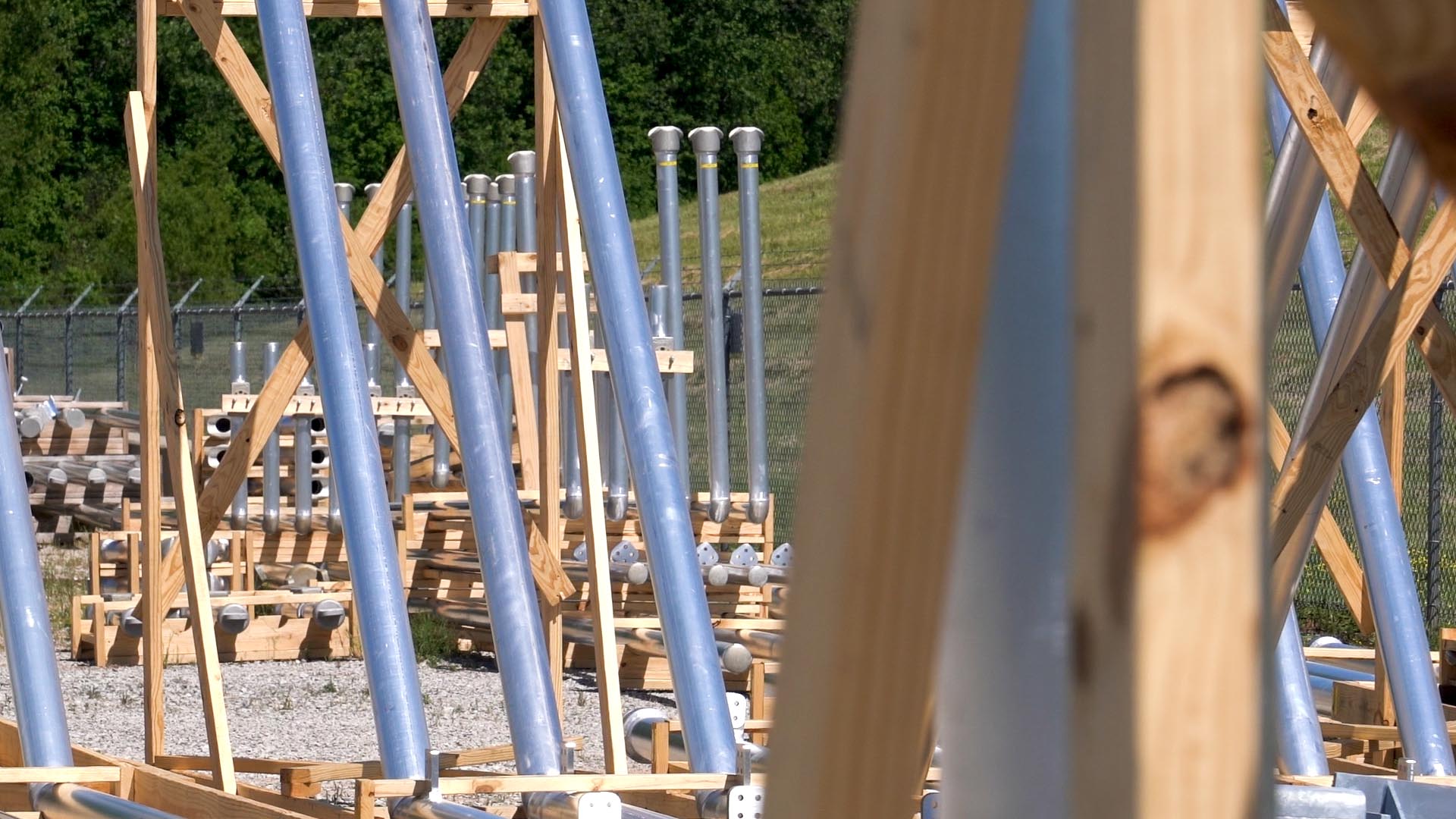
DIS-TRAN’s efficiency was so striking, it set new protocols for both our and the customer’s projects.
Large projects can mean a lot of field welding, adding time and expense to already strained budgets and schedules. For example, if this huge 230/34.5kV project had required full welding out in the field, it might have taken upwards of a month to complete that part of the project.
That’s exactly the situation DIS-TRAN’s pre-fabricated bus (PFB) is designed to alleviate. Even with a sectional approach to installation (where the client moved back-and-forth between project pieces, instead of installing the PFB all at once), we were still able to cut that welding time at least in half.
We further streamlined the project with our approach to packaging for this customer.
Specifically, instead of layering jumpers and other materials on top of each other in huge crates, we stood them up vertically, tagged them, and separated them into partitions. We then divided components into dedicated crates for each transformer. That way, the clients could:
In fact, this project was so successfully efficient, it set new standards in practices both at DIS-TRAN and with the customer. We have since adapted this approach to packaging materials for all projects, and the client was so pleased with the PFB, we now quote our PFB product on all their projects.

DIS-TRAN’s certified welders are equally at home in our shop and in the field.
DIS-TRAN’s pre-fabricated bus (PFB) can significantly reduce necessary field welds because most of the welding happens during fabrication before the PFB even arrives on site. That, in turn, yields shorter lead times, reduced expenses, and safer projects.
However, even the PFB rarely eliminates all field welding. For example, some structures may be too big to ship completely welded, as happened on this 138kV substation. Here, we handled most of the welding in our assembly facility but still had 56 welds left to be completed in the field.
Although the customer had welders on staff, none felt comfortable working with aluminum. Thankfully, DIS-TRAN’s staff of welders, including our shop manager, are seasoned and certified workers who excel equally both in the shop and in the field.
Levi Deleon, DIS-TRAN Project Manager, explains, “We try to eliminate field welding for the customer as much as possible. When paired with the PFB, DIS-TRAN has the right people to provide that service and do it very well and very efficiently.”
In fact, schedule-wise, if DIS-TRAN follows the PFB with our own field welding service, we can ensure work is completed immediately after delivery of the PFB. That yields significant scheduling efficiencies – which, in turn, make the service more cost advantageous.
Miles into the middle of nowhere, DIS-TRAN makes a first-class first-impression…and potentially saves our client eight figures annually.
Home to a scant 27,000 people – fewer people than would fit into a football stadium – Carlsbad, NM is surrounded by miles and miles of empty, remote land. It’s the perfect region for a drilling operation run by our customer (part of the Bass Oil Group), but the area’s aging transmission lines required them to power the operation with inefficient and expensive diesel engines. They realized they could unearth significant savings by building an on-site, 115kV/12.47kV outdoor steel substation (and updating the local transmission lines in the process).
They were right: we estimate that for every $1 spent on building the substation, they saved $3 to $6 in annual energy, operations, maintenance and fuel costs over the previous installation.
They asked for the full-service experience from DIS-TRAN, so under our EPC arrangement, we coordinated all aspects of the substation design and construction, including overseeing and liaising between the electrical contractor; DIS-TRAN’s own engineering, procurement and billing teams; and our customer's staff and stakeholders. We even deployed advanced services to ensure the client and contractors faced few-to-no issues during construction and installation. For example, our on-site inventory services team personally delivered secure Connex containers with all project materials and then tallied and measured all equipment and supplies against project needs.
In short, we delivered end-to-end, top-to-bottom, first-class service that saw the substation energized on time and completed with such rigorous adherence to the intricate design that the staff in Ft. Worth, TX can monitor station performance down to individual relays.
The customer was so pleased they brought us their next project without seeking even a single outside bid!
Building a lattice-type tower on the double!
Our customer, a public utility based in the Northeast, wanted to build a new 115kV add-on to an existing 345kv substation. This project meant duplicating some of the existing structures right next to where the existing steel was standing; the biggest challenge was perfectly replicating an entire lattice-type tower.
It was a complex build, as the lattices supported an extensive array of equipment, from disconnect switches to instrument transformers. DIS-TRAN’s engineers gave the project extra care and time to ensure the new tower would both perfectly match the aesthetics of the existing one and also meet the new specs and functionality requirements.
With a high-quality design in place, DIS-TRAN was able to deliver the project and meet the customer’s scheduling requirements. In fact, we did so even after running into a hiccup (a shipment of mis-fabricated steel, which we got re-delivered within a week)!
The client was so pleased they sent us some homemade jelly and three more substations projects just like Orrington!
Three or four weeks to install? Try 4 days.
DIS-TRAN gave this customer two options for their substation project: pre-assembled skid-mounted or traditional "stick-built."
They went with skids. DIS-TRAN fully marshaled the project (with the steel built just across the street by our sister company, DIS-TRAN Steel), so we gathered all materials in our warehouse and assembled the equipment there, then mounted everything onto the skids for shipping.
The subsequent 1,700-mile cross-country journey to the job-site was a breeze. Our engineering and logistics teams worked hand-in-glove from day one to ensure the assembled equipment could ultimately go on the truck safely, with no permits or re-routing required. (That saved half the typical cost and time of shipping right there.) Then, once the equipment arrived on site, all they had to do was grab it with cranes, set in place and bolt down.
An installation that would have taken three to four weeks with a traditional approach took just four days with DIS-TRAN's.
DIS-TRAN made quick work of our largest ever (to date) factory-built substation.
The power of a DIS-TRAN factory-built substation is time: by speedily assembling a complete system in a factory setting, we can drive down total installed costs and massively reduce on-site work time and expense.
Such was the case with our biggest factory-built station to date. We were able to build a 40-foot-long, 18-foot-wide, 18,000-pound 12kV substation inside DIS-TRAN’s project support service center … in just 3 weeks!
Then, upon arrival onsite in a single piece, the equipment took just 30 minutes to unload and bolt into place.
The result was a station that was easily energized “on schedule and under budget,” according to the customer, who also reported that they “saw a huge decrease in labor hours to finish that part of the station.
”The whole DIS-TRAN part of the installation was completed within a week of delivery.
Transcending national borders with seamless supply & transportation services that border on extraordinary.
The largest transmission company in Alberta, Canada wanted to expand the 230kV/138kV Pike Substation as part of the Christina Lake Area Transmission System Development initiative, and they needed a partner fluent in international substation supply. They turned to DIS-TRAN. While the scope of work was typical – the steel structures and everything that attaches to them – the job’s location in far northern Alberta, Canada, combined with a winter schedule, created a pressing set of challenges:
In fact, not only did we get to flex our logistics and project management muscles by running a nearly frictionless project in an incredibly far-flung location, we were also able to forge new relationships and cement existing ones, all while meeting every substation spec down to the nuts and bolts.
We collapsed installation to just days with a tactic worth its weight in gold.
Our customer – a gold mine in northern Nevada – had upgraded its enormous power shovel and thus needed to update its 115/24.9kV substation. But with the remote site located deep in the Nevada desert, two hours from the nearest urban center, it was key to keep on-site construction to a bare minimum. By shipping pre-assembled, skid-mounted equipment, DIS-TRAN reduced installation time to days.
The client asked DIS-TRAN to produce the nine requested low-side distribution bays as assembled as possible at delivery. DIS-TRAN’s engineers mined their deep expertise and found a solution: dividing the equipment into three different sections, three bays apiece, and mounting each section onto skids for easy transport and installation. The skid-mounted assemblies were kept slim to slide onto standard trucks, split into top-and-bottom halves to undercut height restrictions, and still managed to meet performance specs perfectly.
The trucks arrived on-site Monday morning, and by noon on Tuesday, we had the complete low-side distribution section (all nine bays) sitting in place on their foundations. According to our customers – both the mine’s owner and their engineering firm – DIS-TRAN struck gold. We’ve since gone on to do more work for the same contacts from both companies.
DIS-TRAN’s transmission line packaging is top of the line service.
It was a completely new type of project for us: in addition to a standard substation construction project, the customer was rebuilding a 5- to a 10-mile length of transmission lines in rural New England. We agreed to procure and package all materials for each power line pole along that stretch.
We packed all the necessary materials and components into a single big crate for each transmission pole, which enabled us to transport and deposit each crate exactly where the pole or tower would be erected.
This approach spared the field crews from having to make back-and-forth trips to gather the equipment themselves and drive everything out to the construction sites, some of which were extremely remote in mountainous and rural terrain. Then, once on site, field crews could quickly raise each pole, connect it to the system, and move on right away to the next site.
Our exhaustive QC process also helped reduce overall error in the materials by catching and correcting any discrepancies between what was ordered, what was needed, and what was included before shipment.
We designed a storm-hardening solution that blows the others out of the water.
Storm surge and flooding are major concerns that all coastal utilities must weather. According to our own local utility (Entergy), the Gulf Coast alone is facing cumulative damages of $350B over the next 20 years from hurricanes and severe storms.
In the aftermath of devastation from Hurricanes Katrina, Ike, Gustav and Rita, one customer wanted to insulate their substation against further flood damage.
DIS-TRAN innovated a brand new solution: in-place elevation. We elevated the flood-sensitive equipment of an existing 115-24.5kV outdoor open-air substation, including:
We lifted the equipment to 13 feet above mean sea level, and we did so with:
Decades of experience. Two proven approaches. One team focused on delivering your project the right way.
At DIS-TRAN Packaged Substations, we bring together the strength of Traditional construction and the efficiency of Factory-Built solutions, helping you navigate complexity, reduce uncertainty, and keep your project movingforward. Whether your project calls for a field-executed approach or a controlled, offsite build, our team works alongside yours to plan, coordinate, and execute with discipline from start to finish.


